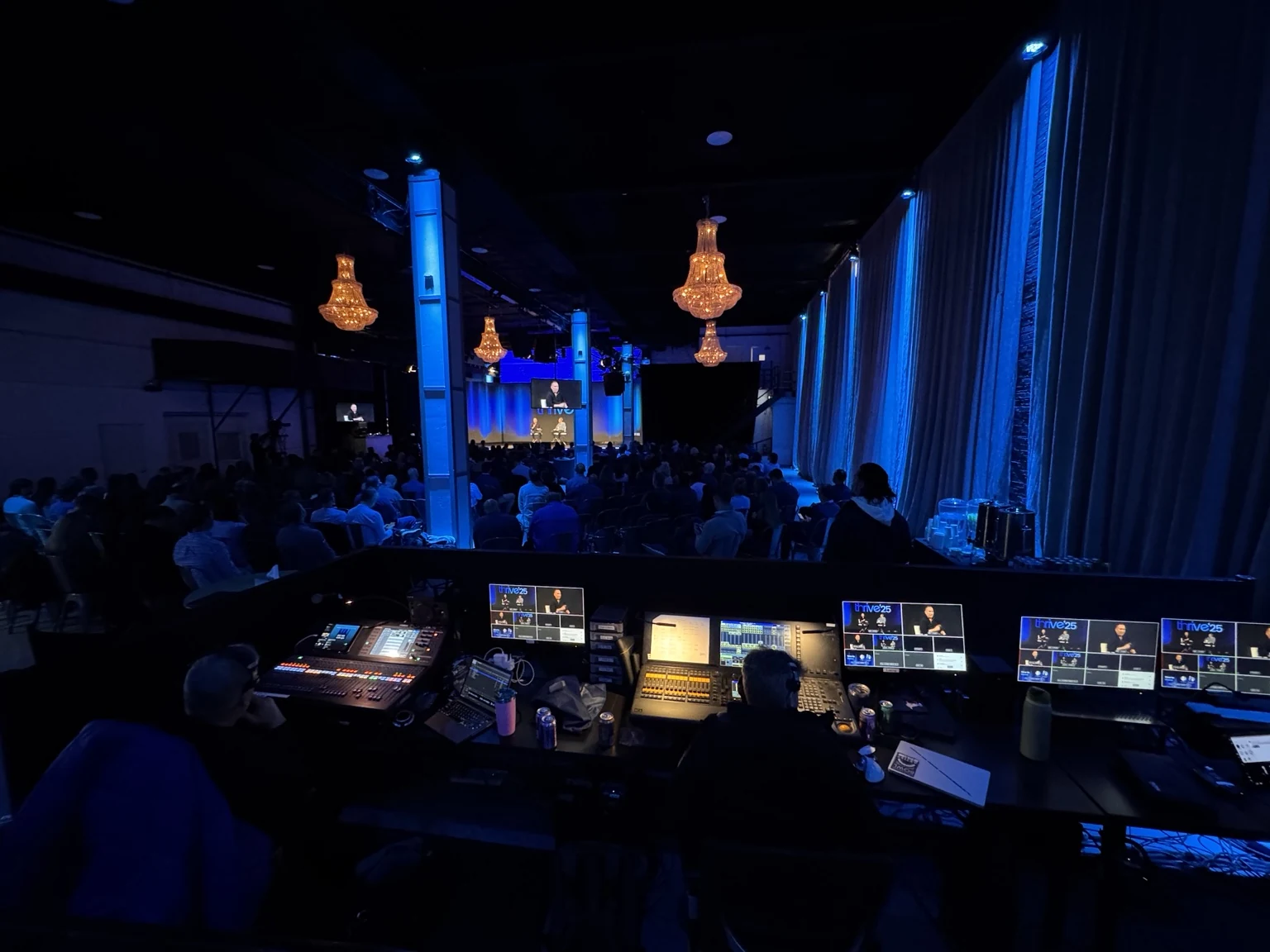

Every moment has a story. Make it worth
watching.
I’m Sean Sullivan. I learned live production in television news, and I still build every show around the people watching it.
It started in the morning newsroom.
Five hours of live morning television: rundowns, timing, breaking news and live remotes. You plan carefully, because the show has to be able to change.
The timing I learned in a rundown is the same timing I use today to direct cameras for an audience watching from somewhere else.
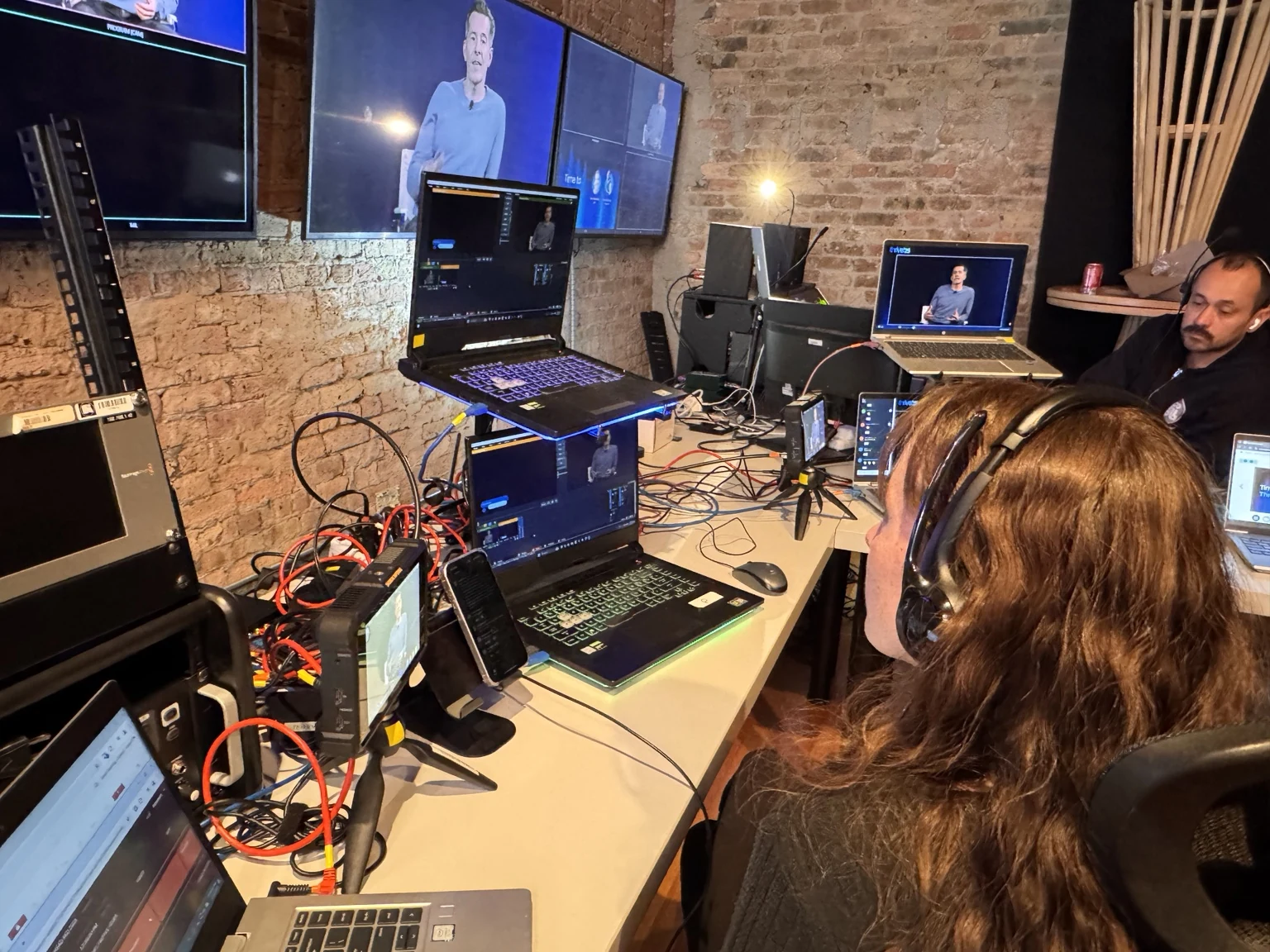
Direct the conversation, not just the cameras.
Webcasts and multicamera shows took what I learned in the newsroom and stretched it. Good camera direction follows the conversation and gets ahead of it. Someone watching remotely deserves more than a static screen share.
Whether people are in the room or somewhere else, I want them to feel part of one connected experience. The technology helps deliver that. It isn’t the point of the show.
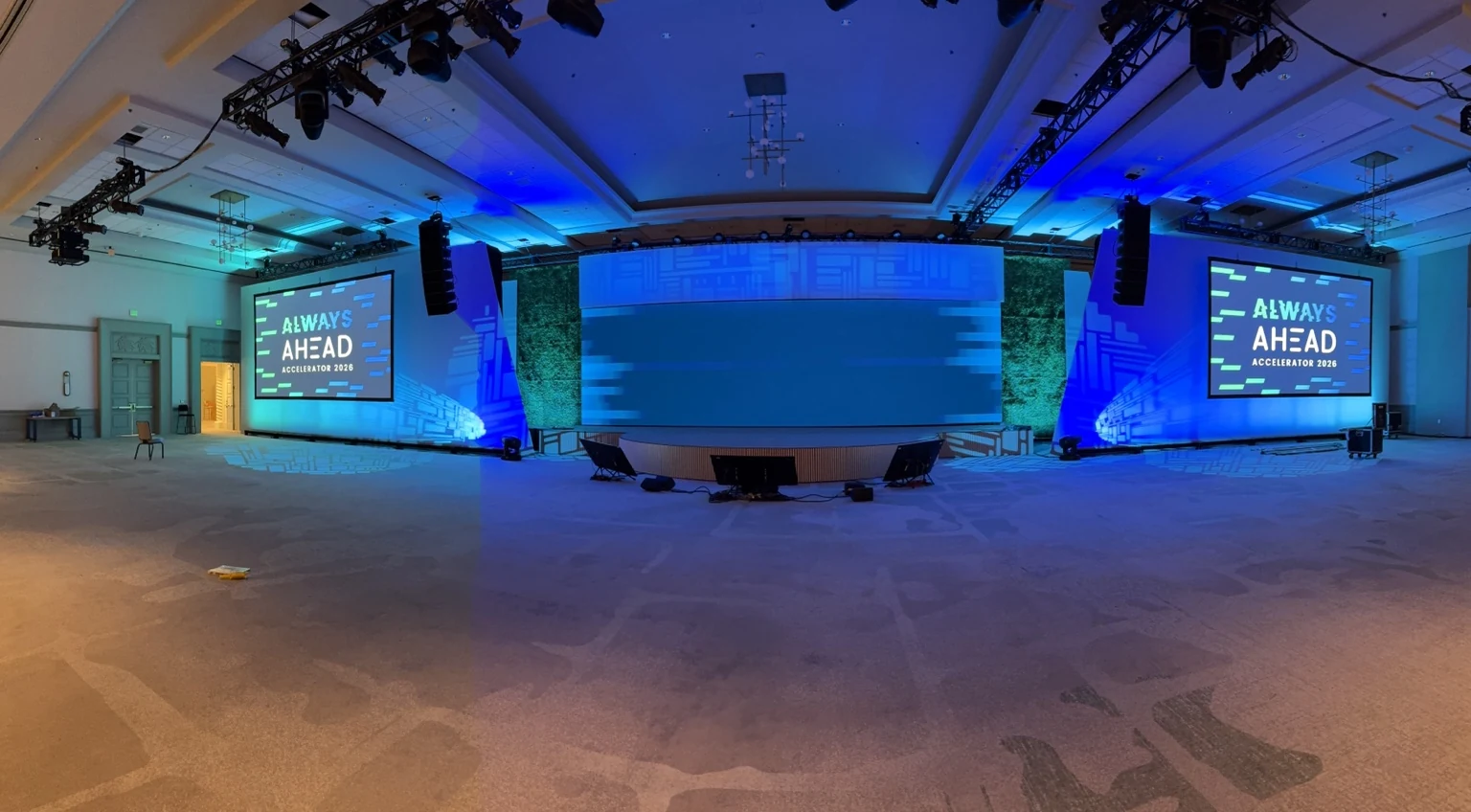
A bigger room. The same audience.
Planning the room, prepping the team and directing the broadcast all feel like the same job to me. I start with the message and what people should walk away with, and every creative and technical choice goes back to that.
How I think about a show
The audience doesn’t see the rundown. They experience the show.
A general session isn’t a list of presentations. Pacing, transitions and a clear point of focus make it feel like one experience.
A hybrid show is one show. The people watching remotely should feel as connected as the people in the room.
Equipment is never the headline. If the technology distracts from the message, it’s the wrong choice.
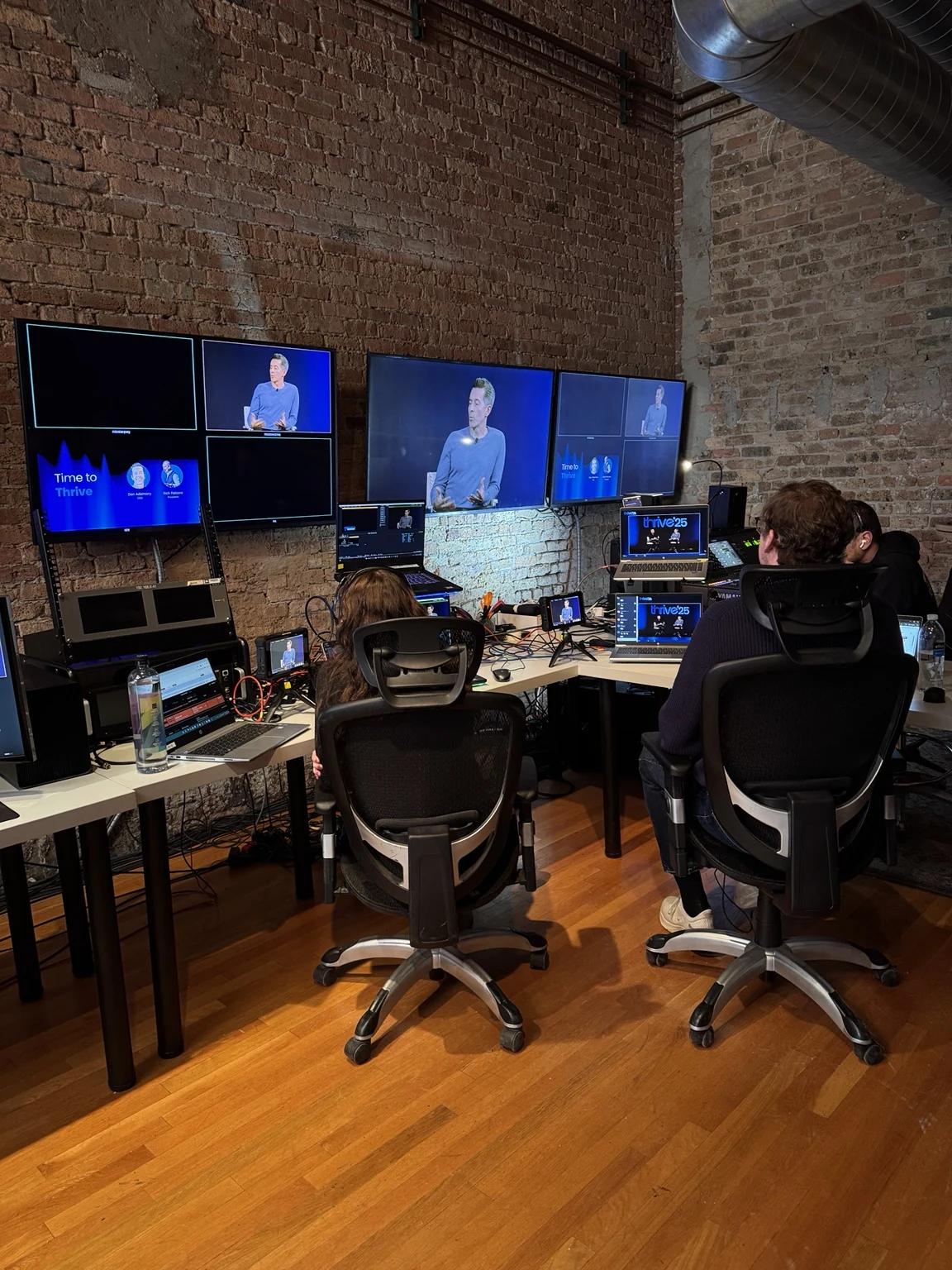
The show matters. So do the people making it.
I want people to enjoy working with me, leave having learned something, and see my hustle, my attention to detail and how much I care about the client and their outcome.
That means showing up prepared, working alongside the crew and explaining why a decision matters instead of just handing out tasks. Being detailed should make the work easier for people, not wear them out.
I explain the why, so the team can make good calls when things change. I'm in it with them. And I try to keep it respectful, and fun, even when the pressure's on.
“Sean knows how to lead; plain and simple.”